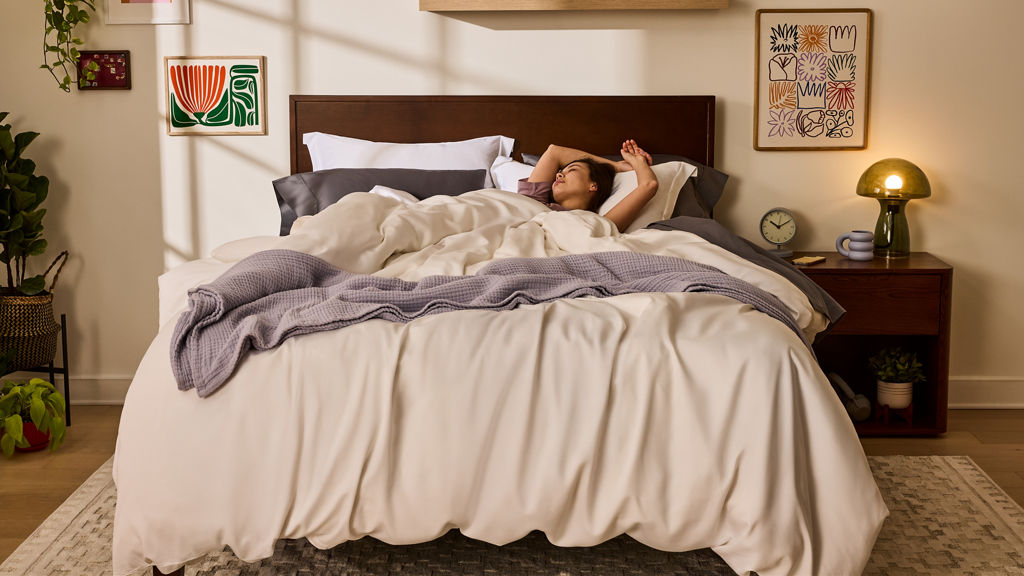

Not Sleeping Well? Here’s How to Improve Your Sleep Naturally
Published: September 19, 2025 at 11:33 am
Read Time: 2 minutes
Author: Jonathan Lobasso
On This Page
Key Takeaways
- Not sleeping well is often caused by your sleep environment—not just your routine.
- Overheating, poor support, and motion disturbance are some of the most common reasons.
- Breathable bedding and cooling mattresses can help regulate temperature.
- Mattresses with low motion transfer can reduce sleep disruption from a partner.
- Small changes to your setup can make a noticeable difference in how you sleep.
We’ve all been there—you’re tired, you go to bed at a reasonable time… and somehow, you’re still not sleeping well.
Maybe you’re tossing and turning. Maybe you wake up in the middle of the night. Or maybe you get a full 8 hours and still feel off in the morning.
If that sounds familiar, the issue might not be your routine—it could be your sleep setup. Many people are surprised to learn that the issue isn’t always how they sleep—but what they’re sleeping on.
Why You’re Not Sleeping Well
A lot of people assume poor sleep is just stress or bad habits. And while those can play a role, what many don’t realize is how much their bed itself is affecting their sleep.
If you’re too warm, not properly supported, or constantly being disturbed, your body never fully settles into deep, restorative sleep.
Not sleeping well is often linked to:
Sleeping too hot
A mattress that no longer supports you
Bedding that traps heat or moisture
Movement during the night, yours or your partner’s
An environment that feels slightly “off”
Common Causes of Poor Sleep
Overheating During the Night
If you’ve ever kicked off the covers halfway through the night, you already know how disruptive heat can be.
Your body actually needs to cool down to fall asleep. When your mattress or bedding traps heat, it can keep you in a lighter, more restless sleep—leading to overall poor sleep quality.
What can help:
Switching to breathable bedding is a great first step—but if you tend to sleep hot regularly, your mattress could be the bigger factor.
Today’s temperature-regulating and cooling mattresses are designed to actively manage heat—using breathable materials, advanced foams, and airflow-focused construction to help keep you comfortable throughout the night.
If overheating is something you experience regularly, upgrading your mattress can often make a big difference in how well you sleep. If you’re unsure where to start, try our Mattress Finder or chat with a Sleep Expert.
Lack of Proper Support
If your mattress or pillow isn’t doing its job, your body quietly compensates all night long. You might not notice it right away, but it can lead to:
Tossing and turning
Waking up stiff
Feeling like you never fully relaxed
What can help:
A mattress that supports your body properly—along with a pillow that keeps your neck aligned—can make a huge difference in how deeply you sleep.
Poor Airflow and Breathability
Sometimes it’s not obvious—but heavier fabrics and dense materials can trap heat and moisture more than you’d expect.
What can help:
Lightweight, breathable bedding like bamboo or cotton helps keep air circulating and your sleep surface feeling fresh—especially if you can’t sleep at night because of overheating.
Environmental Factors: Air, Humidity, Temperature
Ever feel like your room just feels “off” at night?
That could be:
Too much humidity
Air that feels heavy
A room temperature that fluctuates
These small factors can quietly impact how easily you fall—and stay—asleep.
Natural Ways to Improve Sleep
The good news? You don’t need to overhaul everything to sleep better. A few thoughtful changes can go a long way.
Focus on Temperature First
If there’s one thing to prioritize, it’s this.
Switch to breathable bedding
Avoid heavy layers
Consider a cooling mattress if you consistently feel warm
It’s one of the fastest ways to sleep better at night naturally.
Make Sure You’re Properly Supported
Comfort isn’t just about softness—it’s about support. When your body feels supported, it can fully relax. And that’s when better sleep happens.
Reduce What’s Disrupting You
Better sleep often comes down to removing small disturbances—heat, movement, discomfort—rather than adding more routines.
Sleeping With a Partner? What to Know
If you share your bed, your sleep setup matters even more.
One of the most common and overlooked issues is motion transfer—when movement on one side of the bed is felt on the other.
If your partner shifts, turns, or gets up during the night, it can:
Wake you up, even briefly
Interrupt deeper sleep
Leave you feeling more tired in the morning
And most of the time, it’s not your partner—it’s the mattress.
How to Reduce Motion Disturbance
Some mattresses are specifically designed to absorb movement, so it doesn’t travel across the bed.
Look for:
Memory foam, great at isolating motion
Pocketed coils, which move independently
Hybrid designs, a balance of both
If you’ve ever said, “I don’t know why I’m so tired,” this could be the reason. Speak with a Sleep Expert through the Mattress Finder to explore low-motion disturbance mattresses.
How Your Sleep Environment Affects You
Here’s something most people don’t think about:
You spend about a third of your life in bed.
So while room conditions matter, your bed is actually your closest environment.
If something feels slightly off—too warm, not supportive, not breathable—it adds up over time.
How to Build a Better Sleep Setup
If you’re not sleeping well, this is where to start. Think of your bed as a system—each layer plays a role in how well you sleep.
1. Start with Breathable, Cooling Bedding
If you’re waking up warm, uncomfortable, or restless, your sheets and duvet may be trapping heat.
What to look for:
Bamboo or moisture-wicking materials
Lightweight, breathable fabrics
Bedding designed to promote airflow
2. Don’t Overlook Your Pillow
Your pillow plays a bigger role than most people think.
If it’s too flat, too firm, or no longer supportive, it can affect:
Neck alignment
Breathing
Overall comfort
If you wake up stiff, congested, or constantly adjusting—your pillow may be the reason. Explore cooling pillows if temperature is part of the issue.
3. Protect Your Mattress and Your Sleep Environment
Over time, mattresses can collect dust, moisture, and allergens. A breathable mattress protector helps create a cleaner, fresher sleep environment.
4. Upgrade Your Mattress Based on Your Sleep Issue
Your mattress is the foundation of your sleep—and where most people see the biggest improvement.
If you’re sleeping hot →
choose a cooling mattressIf you’re waking up sore →
choose better supportIf you share your bed →
choose low motion transfer
With one of the largest selections of mattresses in Canada, Sleep Country makes it easier to find what works for you.
5. Adjust Your Sleep Position for Better Comfort and Breathing
Sometimes, how you sleep matters just as much as what you sleep on.
If you:
Wake up congested
Feel pressure or discomfort
Can’t seem to get comfortable
…it may be worth adjusting your position.
An adjustable base allows you to:
Elevate your head and upper body
Improve airflow and relaxation
Find a position that works for you
Some smart adjustable bases even track air quality, humidity, and temperature—helping you better understand your sleep environment.
For many people, this becomes a game-changer—especially when combined with the right mattress and bedding.
Think of It as a System, Not Just One Product
Better sleep doesn’t usually come from changing just one thing.
It’s the combination of:
Breathable bedding
A supportive pillow
A clean, protected mattress
The right mattress
Proper positioning
When everything works together, your sleep environment becomes more balanced—and that’s when you start to feel the difference.
Frequently Asked Questions
How can I sleep better naturally?
Start with your environment. Breathable bedding, proper support, and a comfortable temperature can make a noticeable difference.
Why am I not sleeping well even when I’m tired?
It’s usually not about how long you sleep—it’s how well you sleep. Discomfort, heat, or interruptions can prevent deeper, restorative sleep.
Does bedding really make a difference?
It does. Bedding affects airflow, temperature, and comfort—all of which play a role in sleep quality.
Can my mattress really be the problem?
Yes. If it’s not supporting you properly or trapping heat, it can quietly disrupt your sleep night after night.
Does sleeping with a partner affect sleep?
It can. Movement during the night can disrupt sleep—but a mattress with low motion transfer can help reduce that.
Can sleep position help?
Absolutely. Even a slight elevation or better alignment can improve comfort and breathing.
Final Thoughts
If you’re not sleeping well, you’re not alone—and more importantly, it’s something you can improve.
Often, it’s not about doing more—it’s about fixing what’s already there.
From breathable bedding and better support to cooling mattresses, reduced motion disturbance, and smarter sleep positioning, the right setup can completely change how you sleep—and how you feel the next day.